
Nous devons vérifier que votre inscription n'est pas une entrée automatique. Veuillez s'il vous plaît compléter le test suivant:
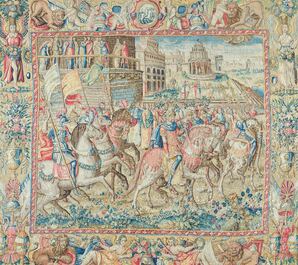
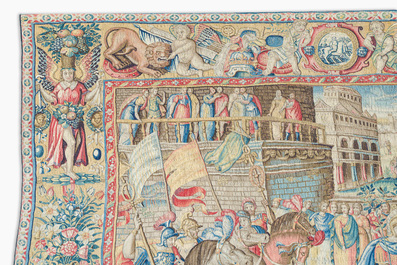
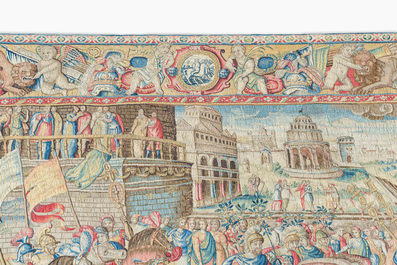
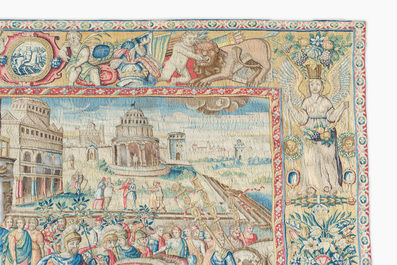
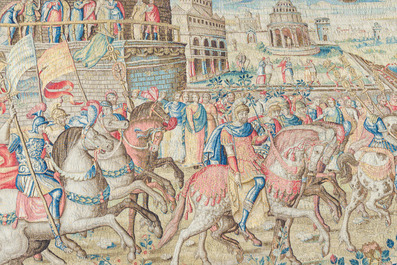
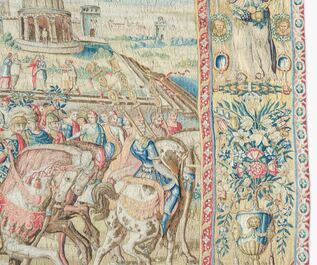
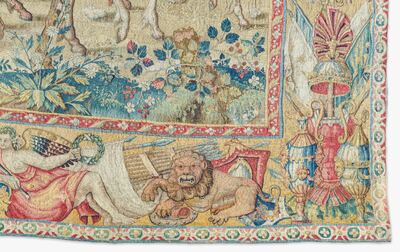
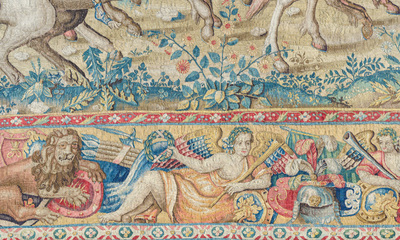
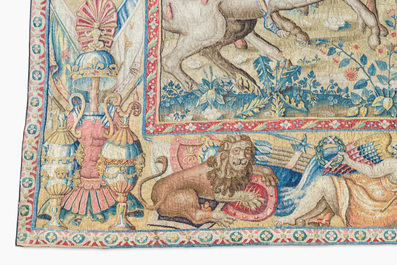
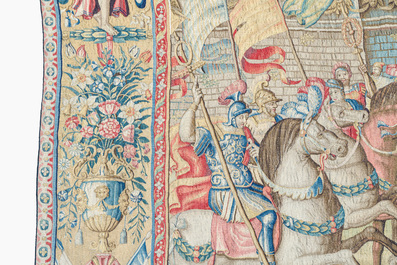
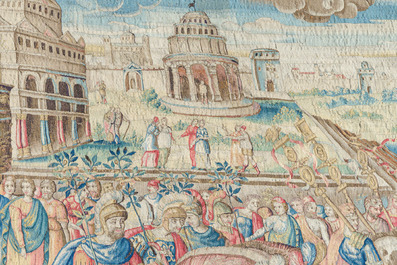
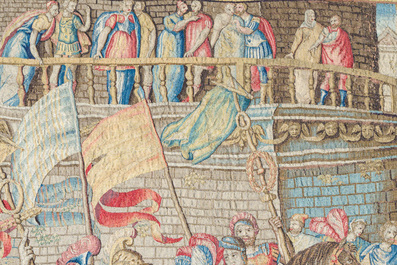
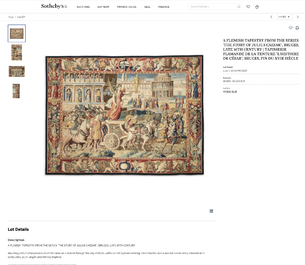
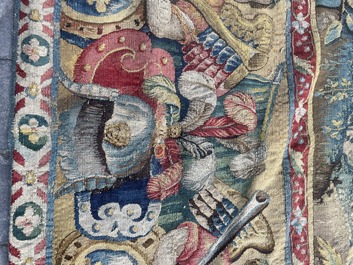
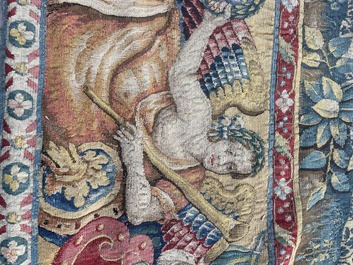
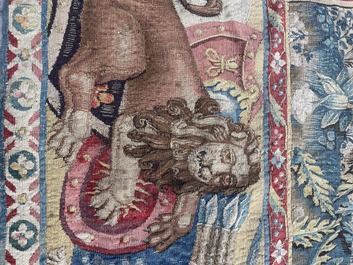
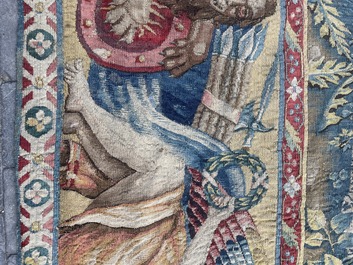
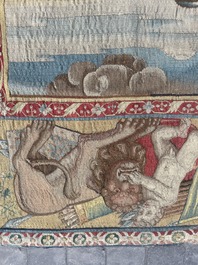
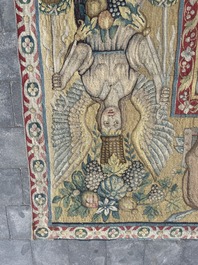
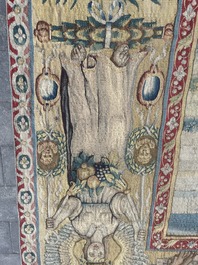
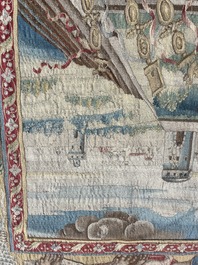
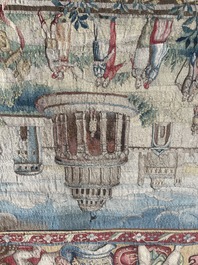
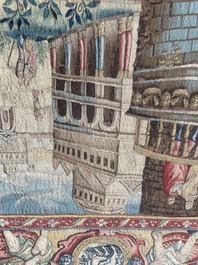
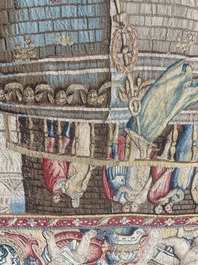
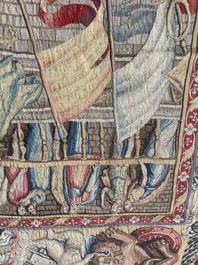
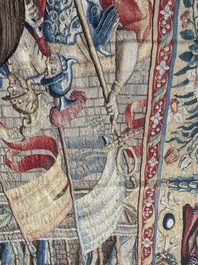
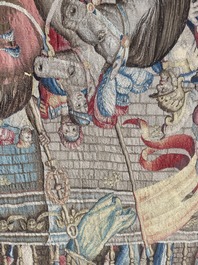
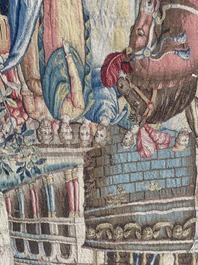
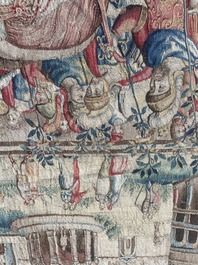
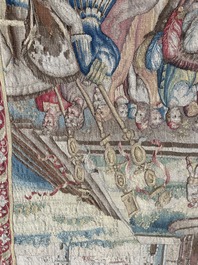
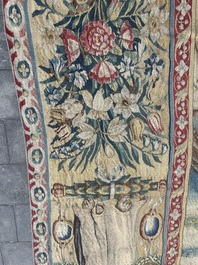
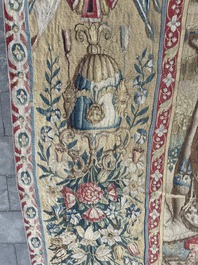
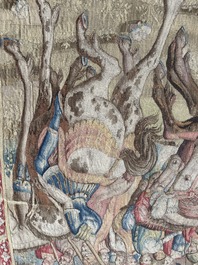
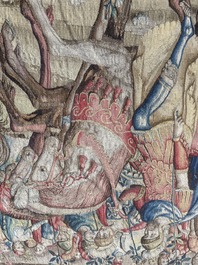
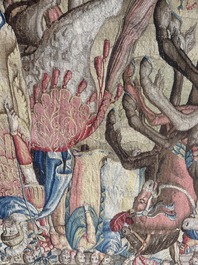
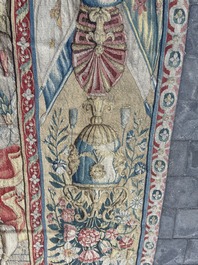
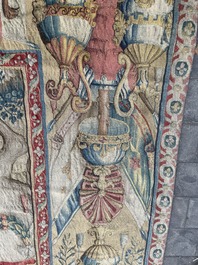
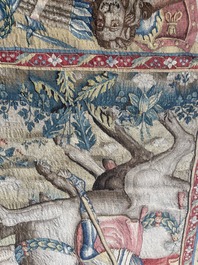
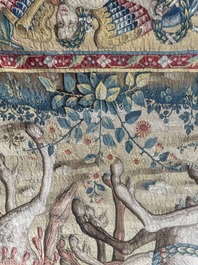
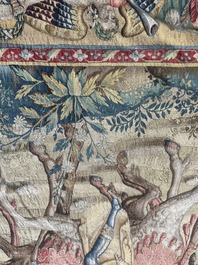
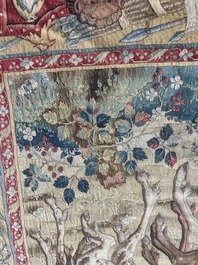
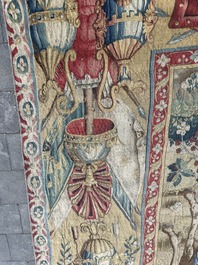
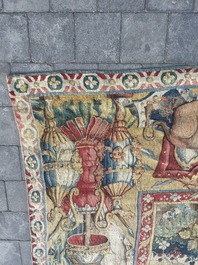
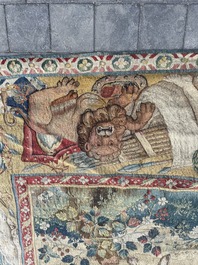
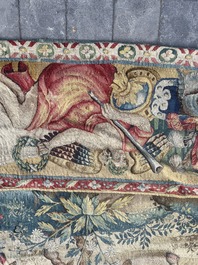
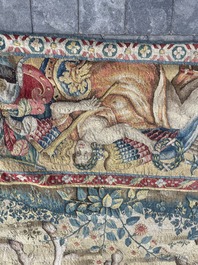
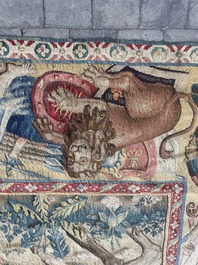
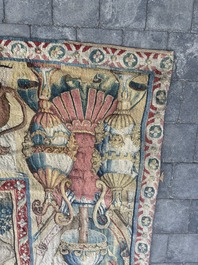
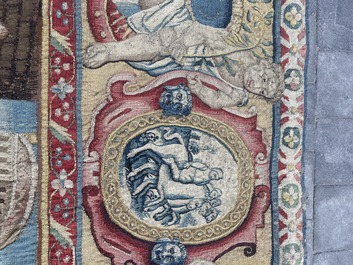
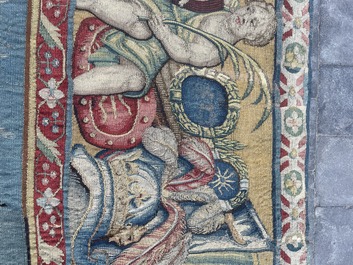
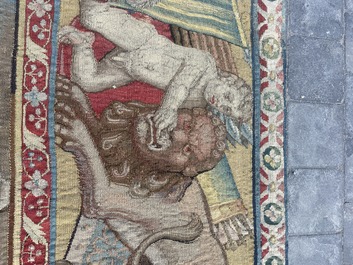
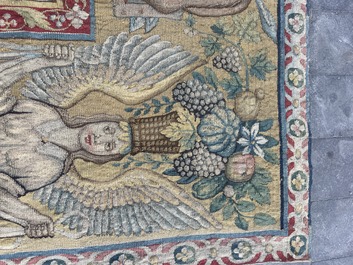
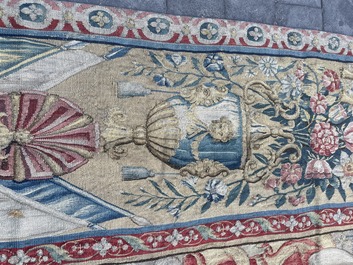
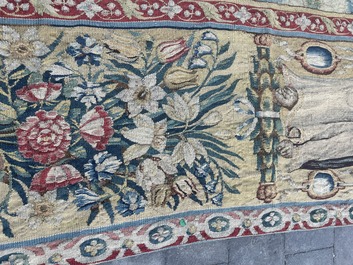
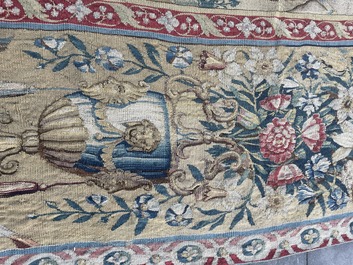
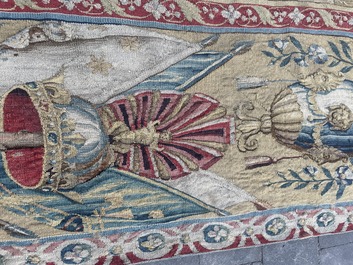
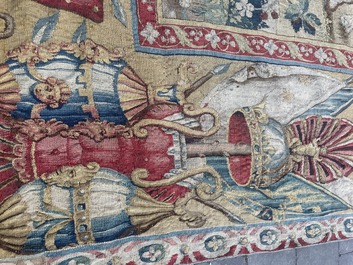
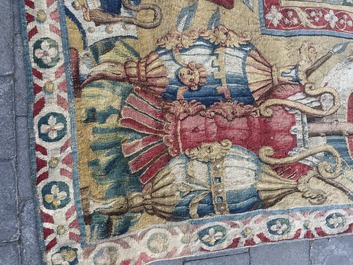
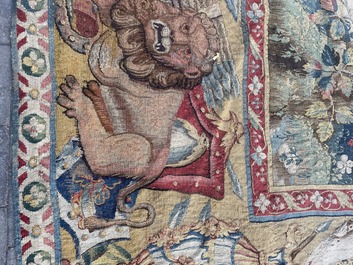
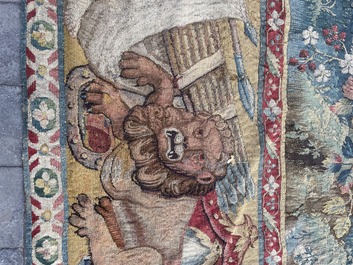
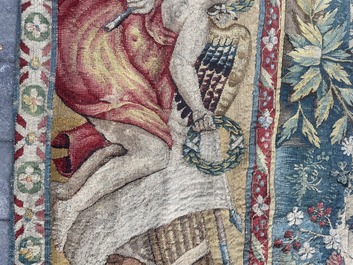
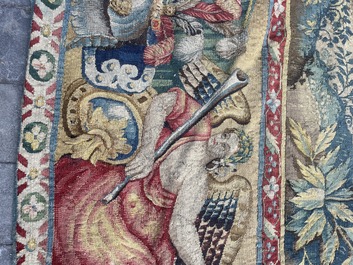
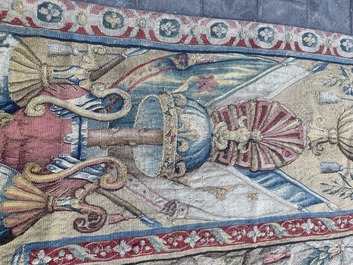
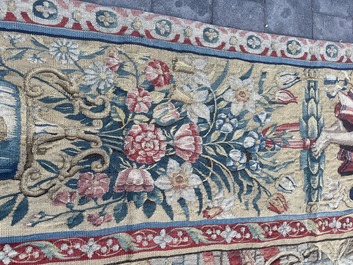
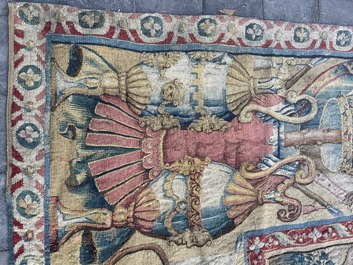
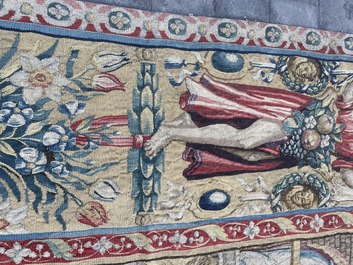
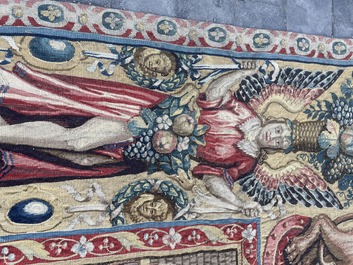
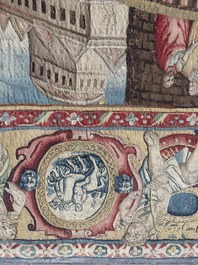
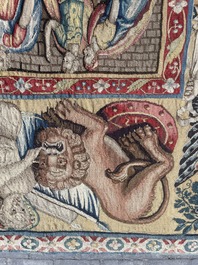
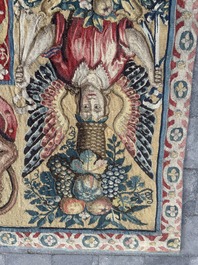
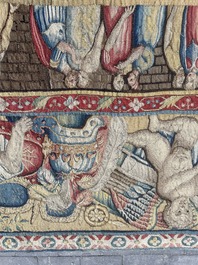
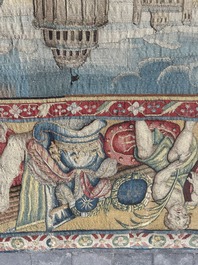
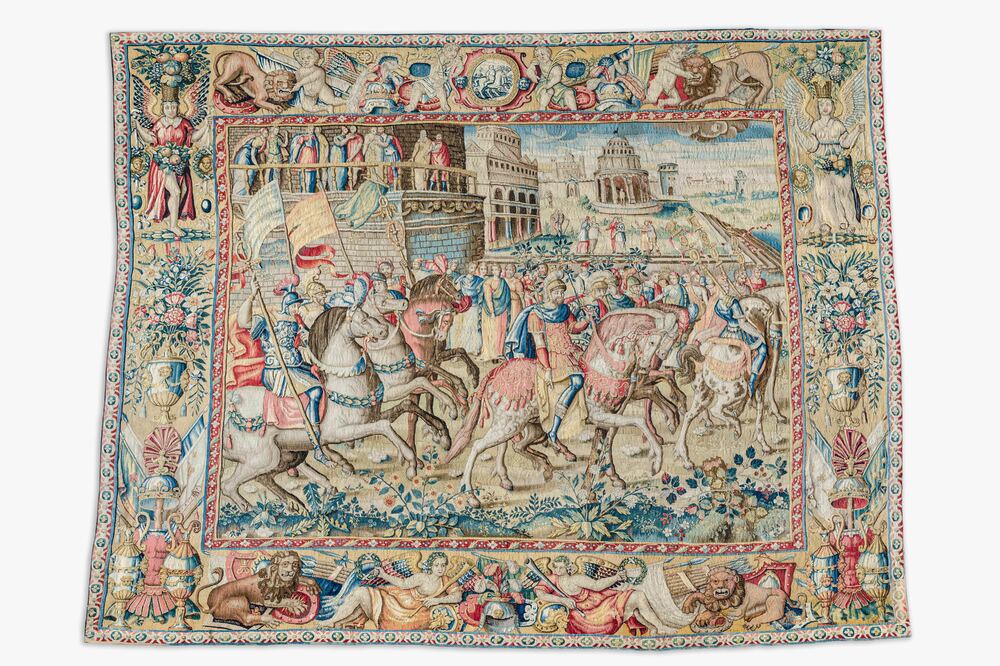
Importante tapisserie murale de Bruges représentant 'Les porte-drapeaux' de la série 'Les Triomphes de César', seconde moitié du 16ème siècle
228
380 x 342,5 cm
Provenance:
- A Belgian private collection.
- Restored in the foremost tapestry restoration workshop, De Wit Royal Manufacturers, in 2001, as marked on the back.
Condition:
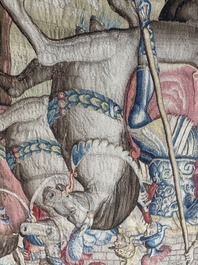
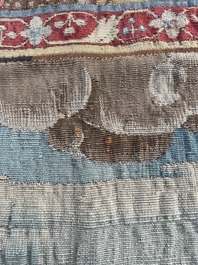
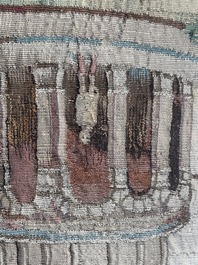
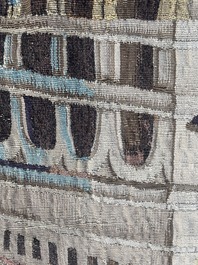
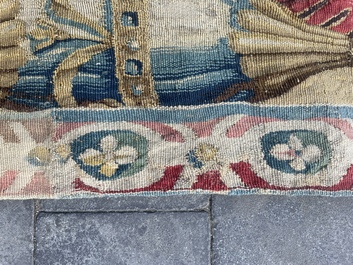
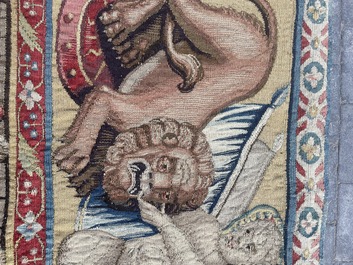
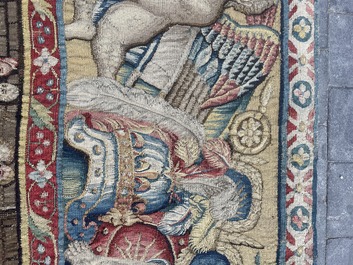
- Generally in good condition, in line with the restoration executed in 2001 and confirmed by the De Wit workshop.
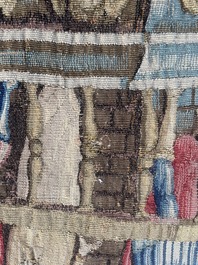
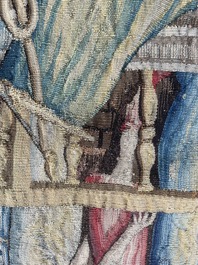
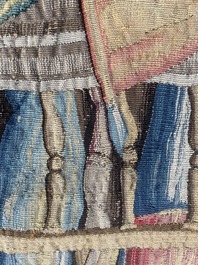
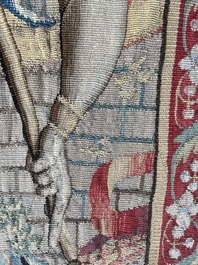
- See also the additional images added.
Ref.:
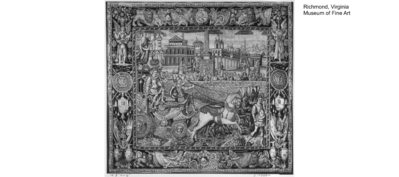
- Richmond, Virginia museum of fine art, acc. no. 97.P.7, for an example depicting 'The Triumph of Caesar', which had its borders removed upon acquisition after the sale of 1932 of the Dr. R.H. Sayre collection in New York. (see added black and white image of before the removal) (link)
- Sotheby's, Paris, June 4, 2020, lot 107, for a related but somewhat larger example, probably from the same workshop, depicting a triumphal procession of the Fame on a chariot, also from the series 'The Triumphs of Caesar'. (sold EUR 47.500) (link)
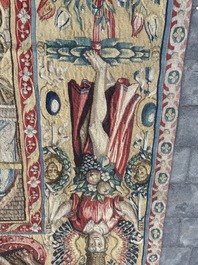
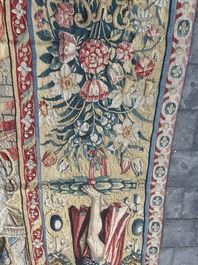
- Delmarcel & Duverger, Bruges et la tapisserie, Bruges, 1987, fig. 13-17/1, for a smaller version of our example, sold in the 1932 sale of the Dr. R.H. Sayre collection in New York. In the comparative table of border designs, the border design on our current example is attributed to ca. 1550 (type D, section II for the second half of the 16th C.)
The author notes:
Scenes from Ancient History: Under this general heading, we group here five fabrics which, although with different borders, are related both stylistically and in content. They each present antique military scenes that originally formed part of one or two large, very similar series
The Bruges origin of this group is proven by the marks on the Battle Scenes in Bruges (cat. 17), by the typical yellow and red colours of the borders, and by the frieze with arabesques and interlacing motifs also found on the series by Gombaut and Macée. The exact date of their creation cannot be determined; based on the style of the figures and the repertoire of border motifs, they can at best be placed in the second half of the 16th century.
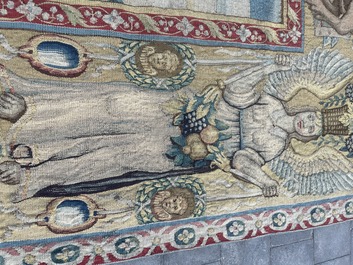
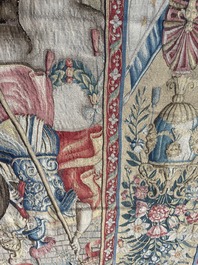
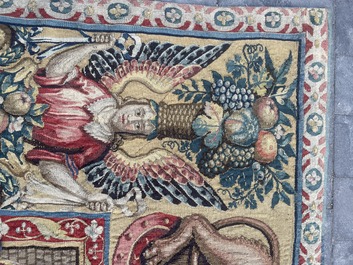
J.P. Asselberghs rightly indicated a starting point for a classification in the group of five tapestries, sold from the estate of Dr. R.H. Sayre in New York in 1932. Four of the five tapestries depict the triumph of a general in Rome, presumably Caesar: standard-bearers, soldiers with spoils of war on an elephant, followed by captive kings, a chariot with prisoners tied to a palm tree and the triumphal chariot of the victor, a tapestry from which the border was removed and which is now preserved in Richmond. Finally, there is another scene of an offering before an altar to Jupiter. The borders of these fabrics, here called type A, are decorated with military trophies, putti in the horizontal sections, and two angels in the upper corners. This series is still to be put in relation with a description of the inventory of the tapestries of King Louis XIV in 1673: 'A wool and silk tapestry hanging, factory of Bruges, representing the History of Julius Caesar, in a yellow background border filled with trophies of arms, two Angels in the corners of the top, and a particular weapon in the middle', containing 44 ells of course, 3 1/4 ells high, in fifteen pieces doubled by strips'. In 1985, a sixth piece with a similar border was sold in Paris, namely the Harangue of the Victorious General to his Troops, a subject included in a later edition. Of the two fabrics from the Sayre sale in 1934, there remains, according to old sales, a reissue of the Standard Bearers and the Triumph of the General, with the same border, and others with different types of borders. Thus, the Triumphal Chariot with Prisoners is the only reproduced example of the three pieces from the Maurice Kann sale in 1910: in the middle of the side border, the round shield is replaced by a vase of flowers. At a sale at Parke-Bernet in New York on 5 October 1946, a reissue of the Elephant and another subject from the same group, the Triumphal Chariot with an allegory of the Trumpets of Fame were on display: here, the borders are entirely filled with military trophies on a floral background, with the angels removed. This latter border type C also decorates the General's Clemency, currently in Bruges. A reissue of the Triumph of Fame, with a slight variation of the border type B, appeared at a sale in Amsterdam in 1910.
Perhaps there is an iconographic connection between the General's Clemency and the Battle Scenes, because, at the end of the 19th century, these two episodes were present in the same collection. The battle scenes, however, have different ornamentation in the border than the pieces we have just discussed, but they feature the same typically Bruges friezes. We can therefore say, in summary, that the five tapestries in question, presenting four different episodes, belong to a large group of which five other subjects are known thanks to old public sales, and that in total, there are at least six different editions. Do the main subjects, if not all nine, belong to a large History of Caesar, as well as 15 pieces still preserved at the Court of France in 1673? We are inclined to believe so, although it is not impossible that some scenes are related to the exploits of another general of classical antiquity Five of the subjects together form a triumphal procession: the Standard Bearers, the Elephants, the Chariots of Prisoners, the Chariot of Fame, the Chariot of the Victor (cat. 13). Three other subjects can also complete such triumphs: The offering to Jupiter in the Offering Scene, the Speech of the victorious general, who shows his soldiers a helmet as a trophy and crowns as a reward (cat. 14), and the General's Clemency for the wives of defeated enemies. The Battle Scenes, where a burning city is besieged and invested, evoke the military operations that lead to victory. The triumphal procession may be that of Julius Caesar: on the now-vanished border of the Richmond Tapestry here was, at the top, a medallion with the bust of a warrior and an inscription referring to Brutus, Caesar's adopted son and also the tyrant's murderer. The scene of Clemency is traditionally deciphered as the episode in which Alexander the Great listens to Darius's wives, but it may also be related to Scipio Africanus, who heard the pleas of Mandonius's wives, and this is perhaps more plausible in a large series devoted to the History of Rome. The cartons or models for this group of Bruges tapestries from the second half of the 16th century are unknown. The rather clumsy drawing of the figures, the architecture, and the ornamentation are perhaps due to a clumsy adaptation of a series of engravings. The overall project of representing in a large series both military actions and the triumphal procession of an ancient general follows, in our opinion, a famous contemporary model of Brussels tapestry art, the Gestures and Triumph of Scipio Africanus, first woven in Brussels between 1532 and 1535 for the king Francois I, after models by Jules Romain. This series soon saw several reissues in Brussels itself. Given the success of this theme, it was probably decided in Bruges in the following decades to place a series with the Exploits and Triumph of Roman leaders (Caesar and Scipio?) on the art market, in a much more modest artistic form. The surviving fragments of the various editions of this group of tapestries lead us to suppose that the Bruges weavers had indeed found a clientele for this subject.
Estimation:
€ 20000
-
€ 40000