Nous devons vérifier que votre inscription n'est pas une entrée automatique. Veuillez s'il vous plaît compléter le test suivant:
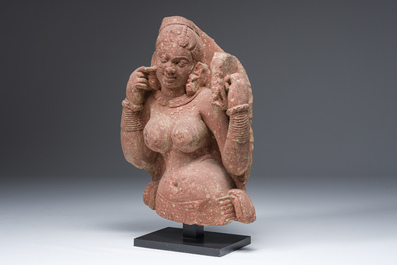
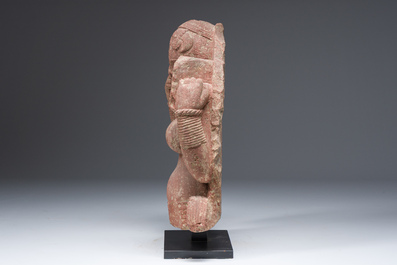
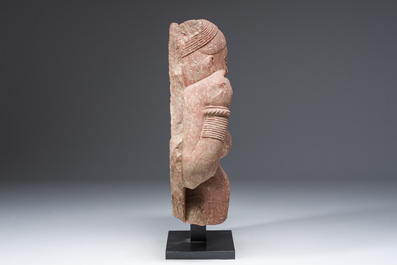
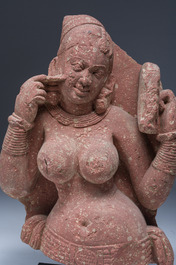
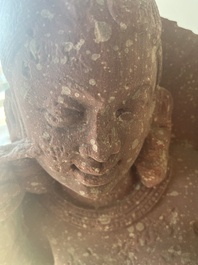
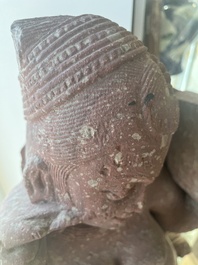
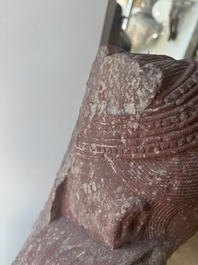
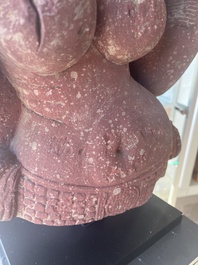
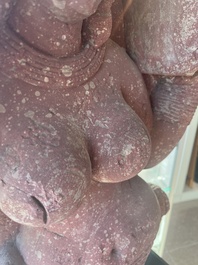
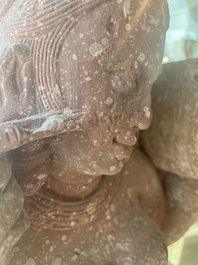
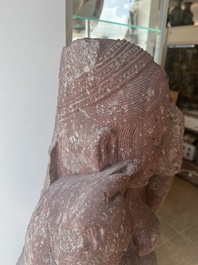
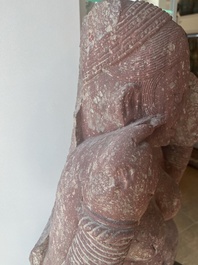
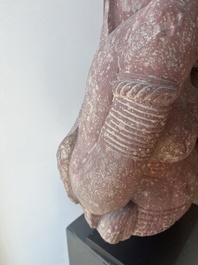
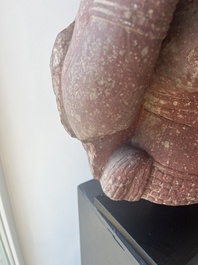
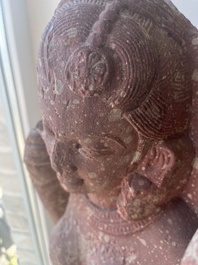
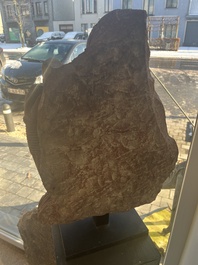
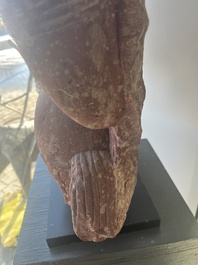
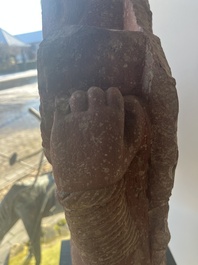
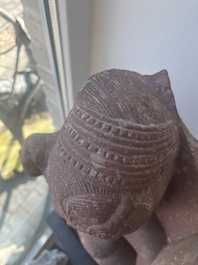
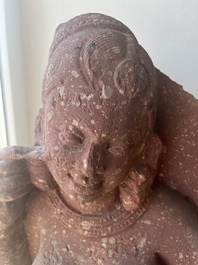
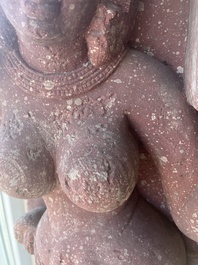
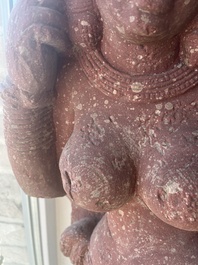
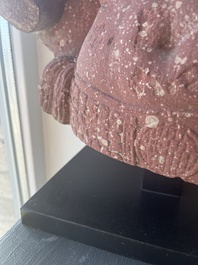
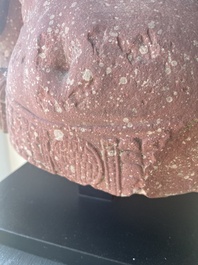
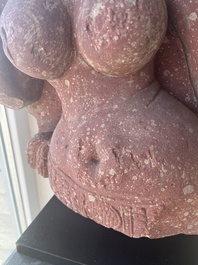
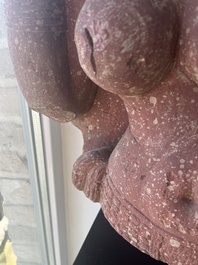
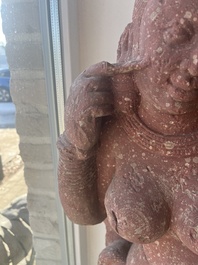
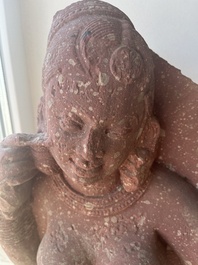
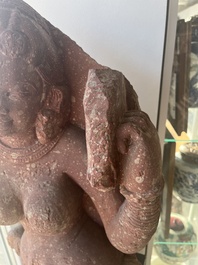
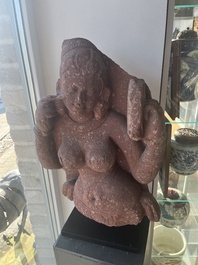
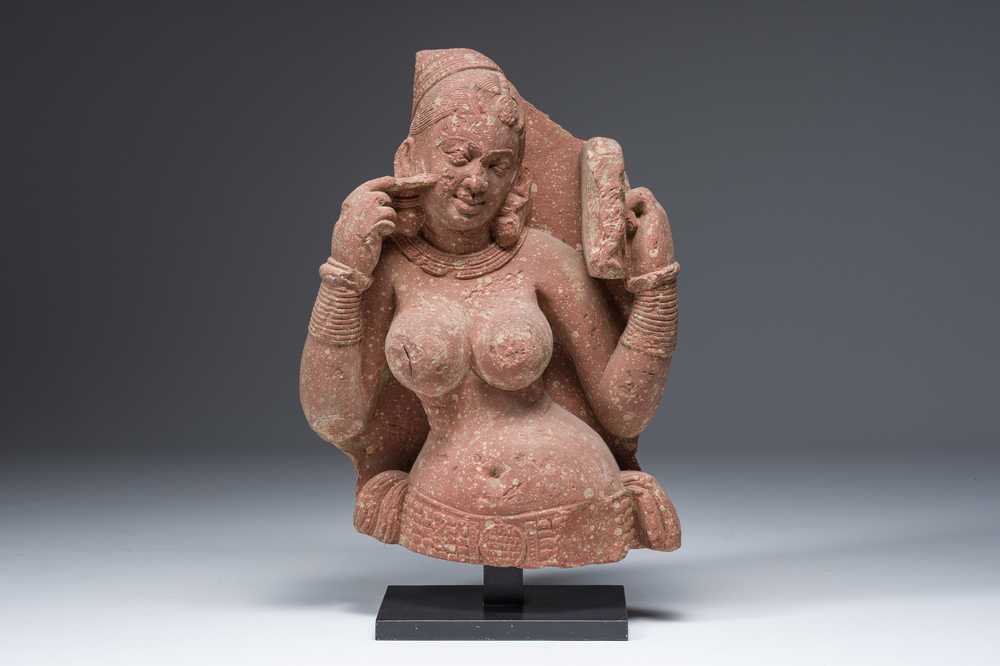
Relief d'une dévata en grès rouge, Inde, probablement école de Mathura, période Kushan, 2ème siècle av. J.-C./2ème siècle
176
H 58 - 47 cm (with and without base)
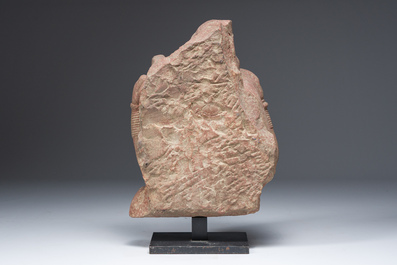
The devatā is portrayed as a jewel-adorned woman with a mirror, originating from a pillar of the balustrade of a Buddhist stupa from the Kushan period.
A devatā (Sanskrit: “a being that embodies light, power or divine qualities”) is a divine or celestial figure, a “lower” divine entity, and may be a nature or place spirit, a protective force, or fulfil a role in the cosmic order. In Buddhist art, devatas are sacred architectural companions who inhabit and protect the sacred space of the stupa. Devatas are cosmic guardians and their sensual appearance has no erotic connotation but indicates energetic harmony and is intended to be both symbolic and magical-ritualistic. These figures later gave rise to the Hindu apsaras (celestial nymphs) found in Hindu temple structures. This image belongs to the “Mathura art”, which was concentrated around the city of Mathura during a period when Buddhism, Jainism and Hinduism flourished in India. Mathura is considered the first artistic centre to produce sculptures for all three religions and was the centre par excellence of religious artistic expression in India until the Gupta period.
Provenance:
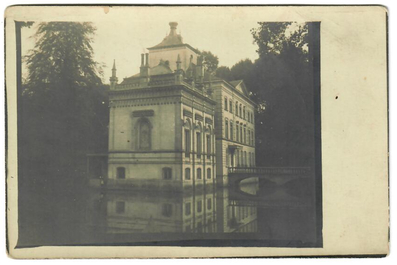
- Ex-collection family Goethals de Mude de Nieuwland, Castle Borgwal (link), Gavere, Belgium. Acquired by this family in the 1930s-50s.
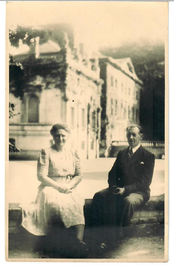
- The grandparents of the current owners (Mr. and Mrs. V.M.-L., Sint-Martens-Latem, Belgium) worked as live-in staff at the castle. Upon their retirement, the castle lord donated it as a token of appreciation. Then subsequently passed on to the current owners through inheritance. We have added old photos of the castle and of the couple, who worked as live-in staff.
Condition:
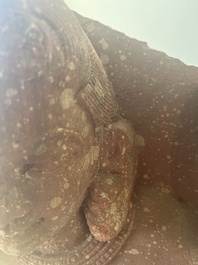
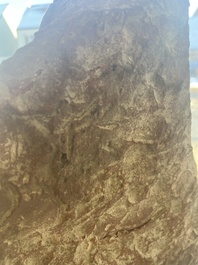
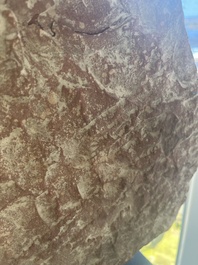
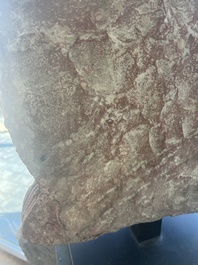
- The fragmentary sculpture overall well preserved, with small losses as visible, superficial wear, encrustation and dirt adhesion.
Estimation:
€ 3000
-
€ 6000