Nous devons vérifier que votre inscription n'est pas une entrée automatique. Veuillez s'il vous plaît compléter le test suivant:
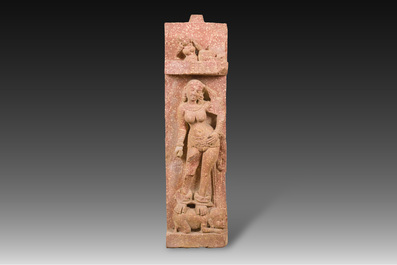
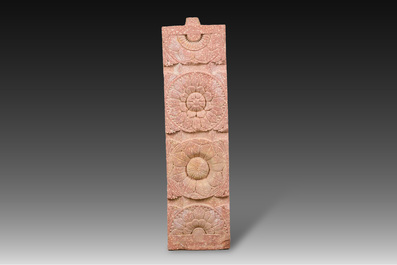
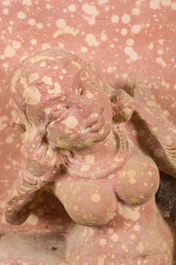
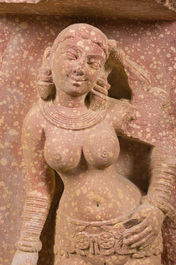
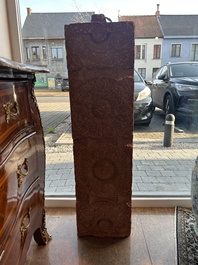
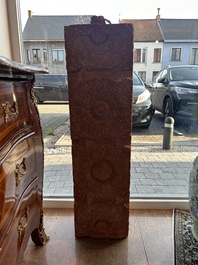
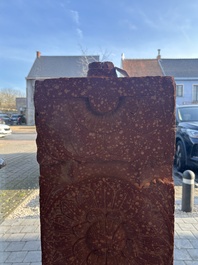
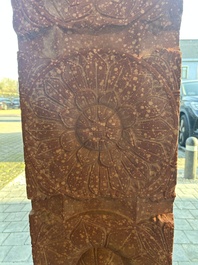
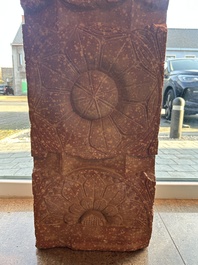
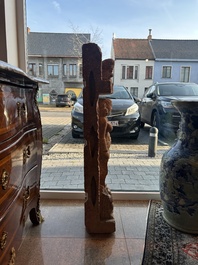
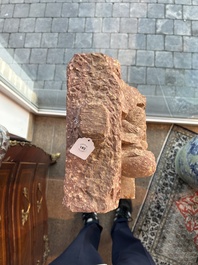
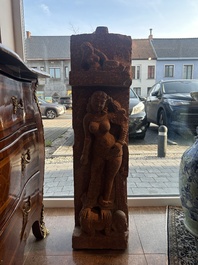
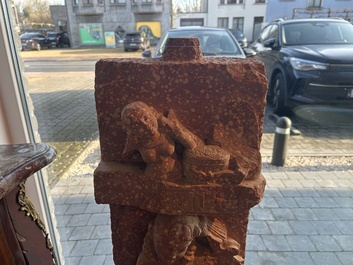
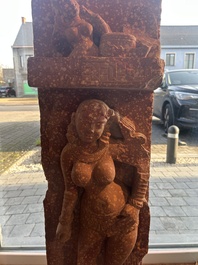
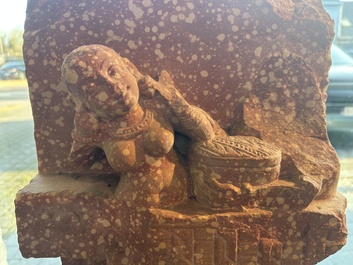
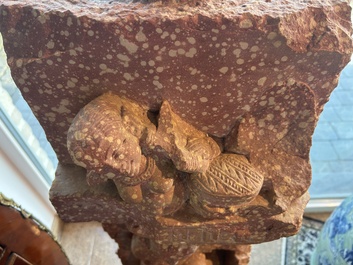
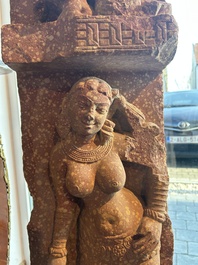
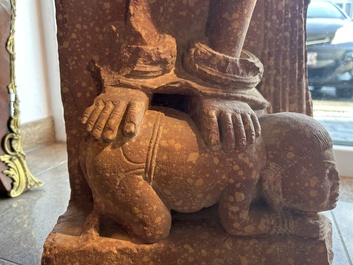
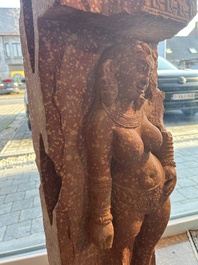
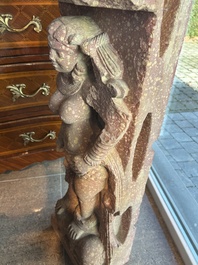
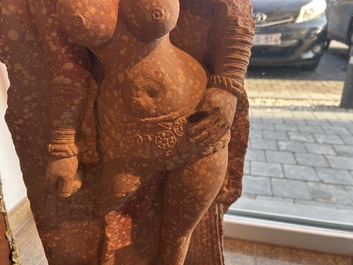
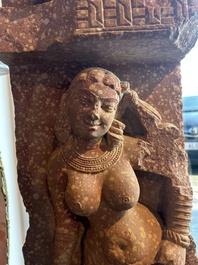
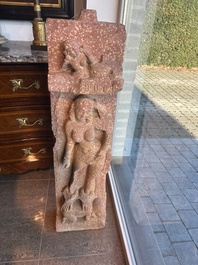
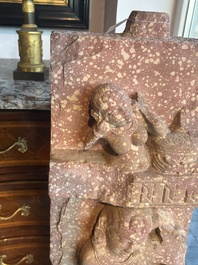
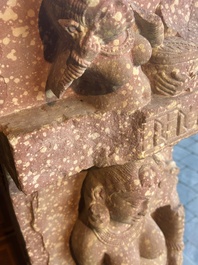
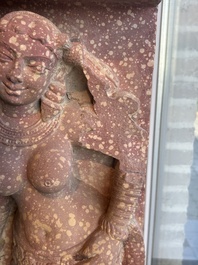
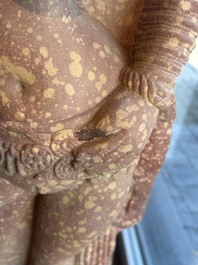
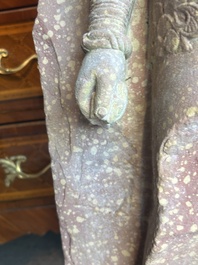
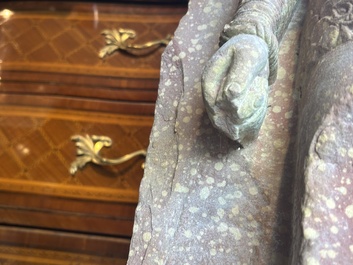
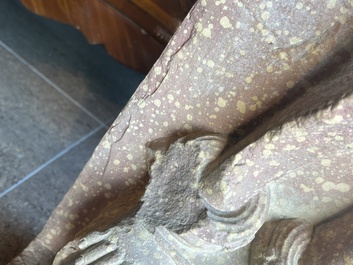
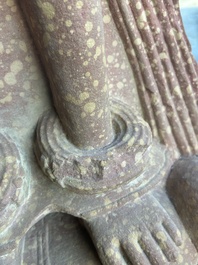
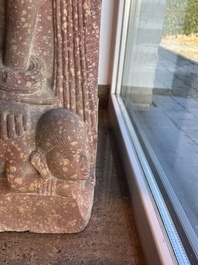
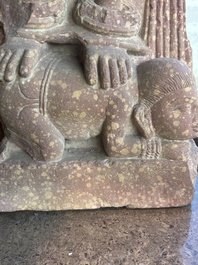
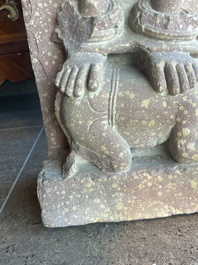
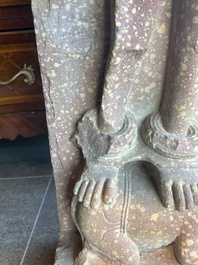
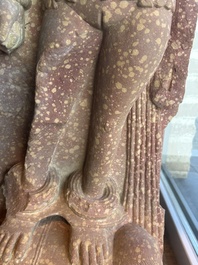
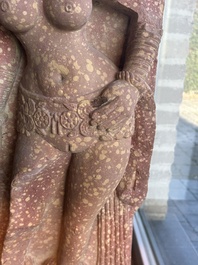
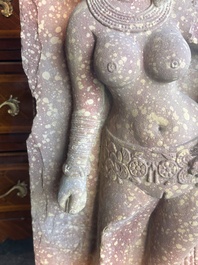
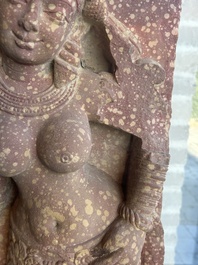
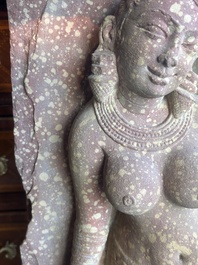
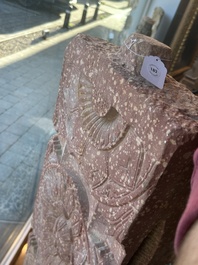
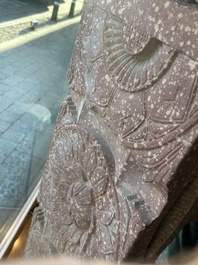
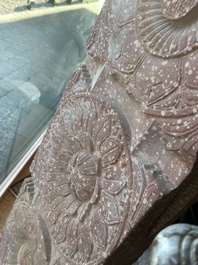
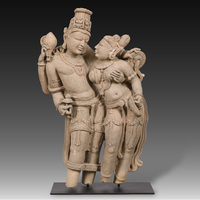
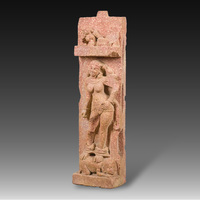
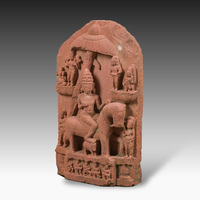
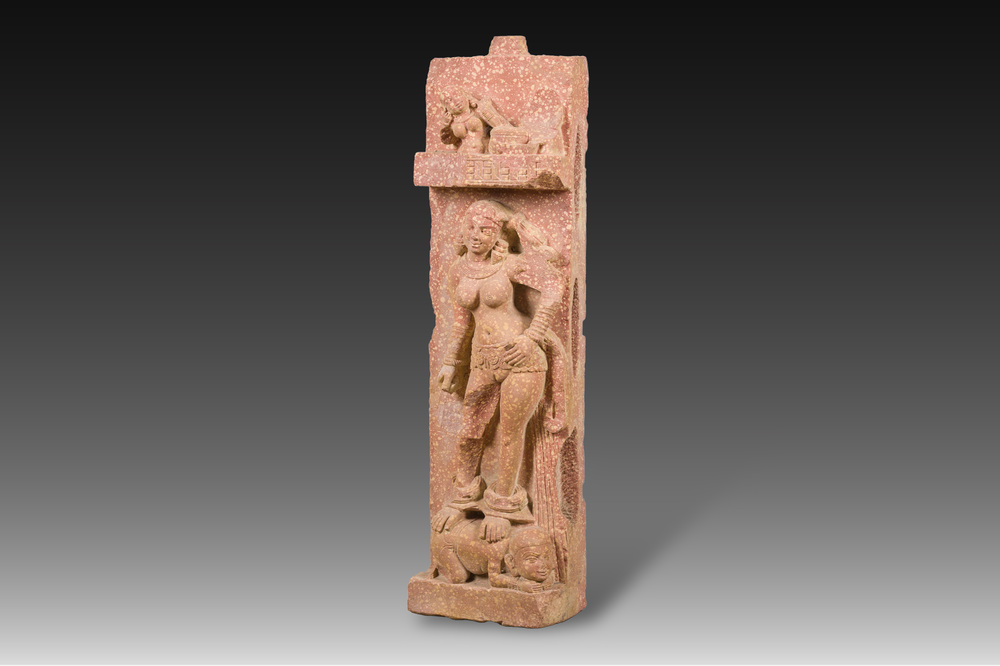
Important stupa en grès rouge avec une dévata en forme de femme et fleurs de lotus, Inde, probablement région de Matura, 2ème s. av. J.-C. - 2ème s.
182
H 115,5 - L 30,5 - D 19,5 cm
Weight: ca. 97 kg
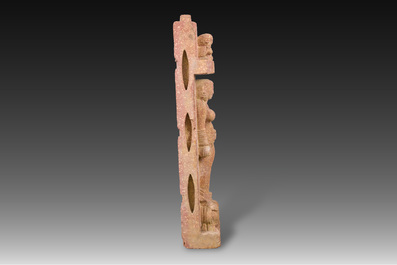
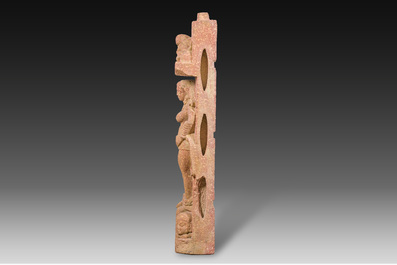
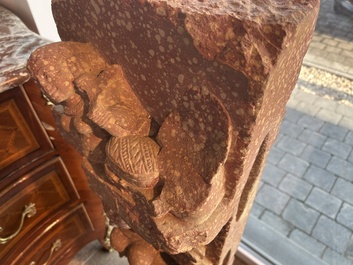
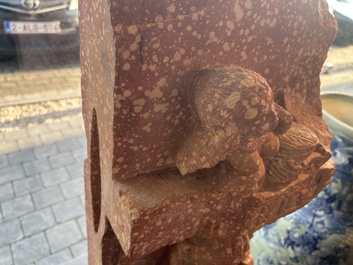
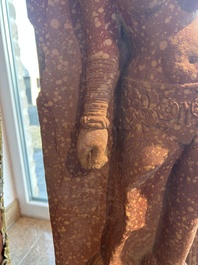
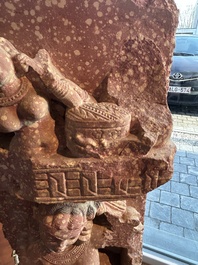
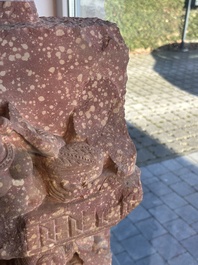
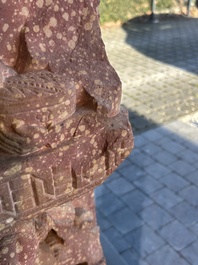
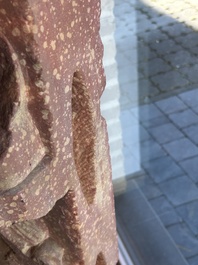
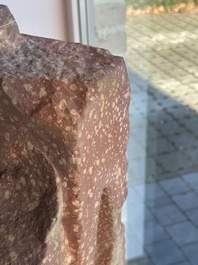
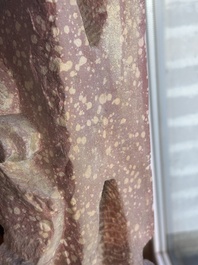
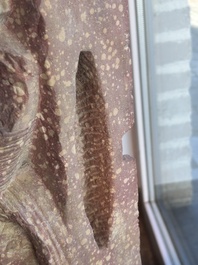
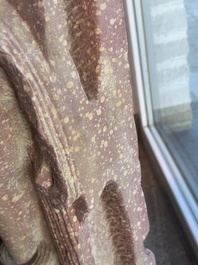
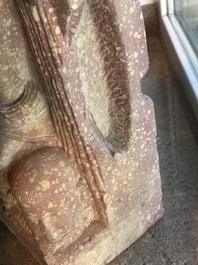
This is a large pillar of a balustrade or vedika, from a Buddhist stupa, with on one side the image of a devata. She is depicted as an upright woman adorned with jewels. On the other side, the pillar has carved medallions with lotus flowers and geometric motifs.
Such pillars were placed around the stupa at regular intervals and were connected by horizontal beams made of wood or stone. A devatā (Sanskrit: “a being that embodies light, power or divine qualities”) is a divine or heavenly figure, a “lower” divine entity, and can be a nature or place spirit, a protective force, or fulfil a role in the cosmic order. In Buddhist art, devatā images are often architectural frames of a stupa and are not intended as objects of individual worship in themselves. They are sacred architectural companions who inhabit and protect the sacred space of the stupa. In addition to being a monument, the stupa is also a ritual walking space (pradakṣiṇā). As you walk around, devatās come to your side to protect you and make the ritual acts prosperous and safe.
Devatas are cosmic guardians and their sensual appearance has no erotic connotation but indicates energetic harmony and is intended to be both symbolic and magical-ritual. These decorated pillars are among the highest artistic achievements of the Kushan period in northern India and belong to the “Mathura art” style, with its highly recognisable yellow-speckled red sandstone sculptures, which was concentrated around the city of Mathura during a period when Buddhism, Jainism and Hinduism flourished in India. Mathura is considered the first artistic centre to produce sculptures for all three religions and was the pre-eminent centre of religious artistic expression in India until the Gupta period.
Provenance:
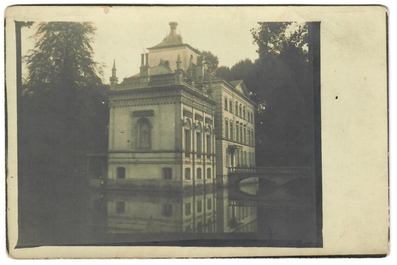
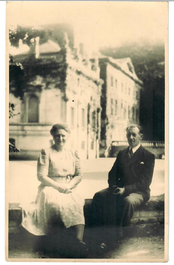
- Ex-collection family Goethals de Mude de Nieuwland, Castle Borgwal (link), Gavere, Belgium. Acquired by this family in the 1930s-50s.
- The grandparents of the current owners (Mr. and Mrs. V.M.-L., Sint-Martens-Latem, Belgium) worked as live-in staff at the castle. Upon their retirement, the castle lord donated it as a token of appreciation. Then subsequently passed on to the current owners through inheritance. We have added old photos of the castle and of the couple, who worked as live-in staff.
Condition: (UV-checked)
- A number of losses throughout:
- A missing figure top right corner.
- Sections missing to the frieze below.
- A section to her upper left arm and elbow.
- A section to an object in her right hand.
- A section to her right leg.
- Wear to the extremities and minor superficial damages throughout.
Estimation:
€ 4000
-
€ 8000