Nous devons vérifier que votre inscription n'est pas une entrée automatique. Veuillez s'il vous plaît compléter le test suivant:
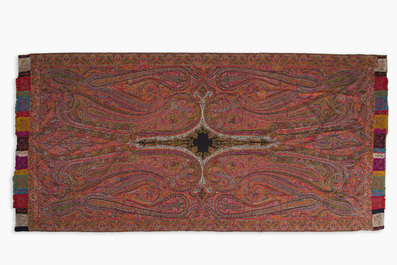
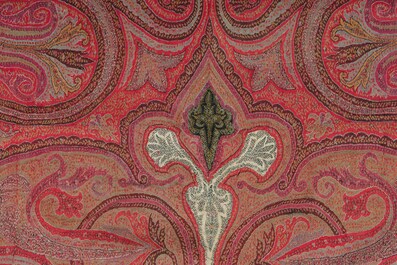
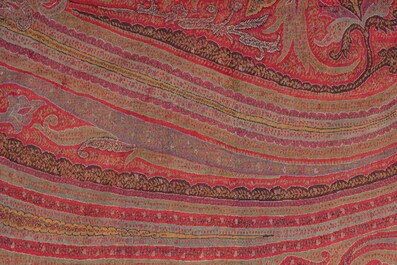
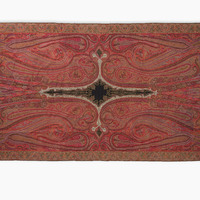
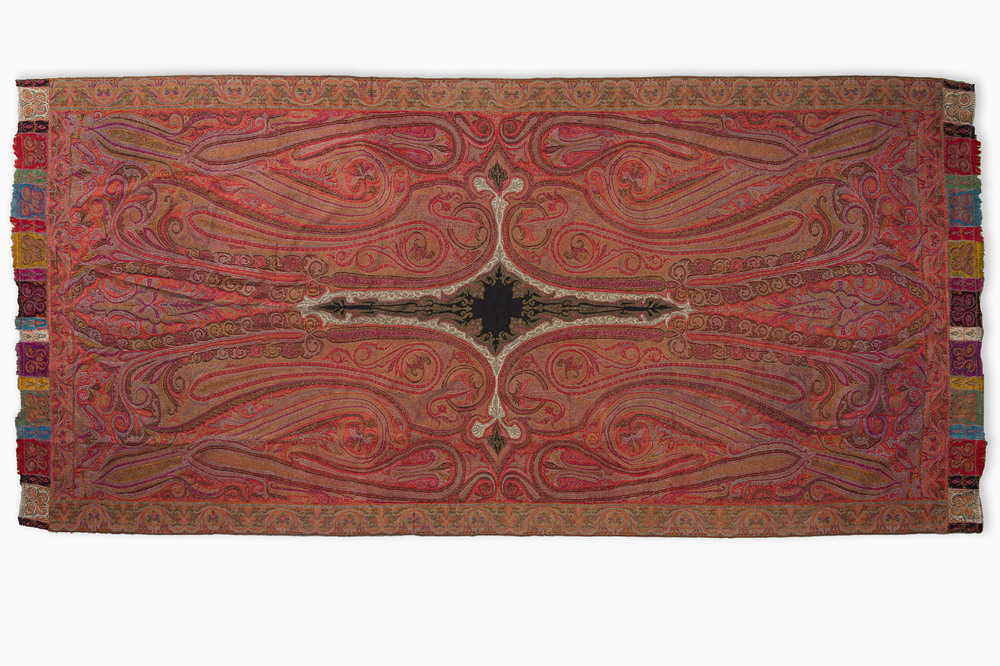
Rare châle de type kani tissé à la main à décor de médaillon central entouré de palmettes, Inde, Cachemire, fin du 19ème siècle
188
310 x 148 cm
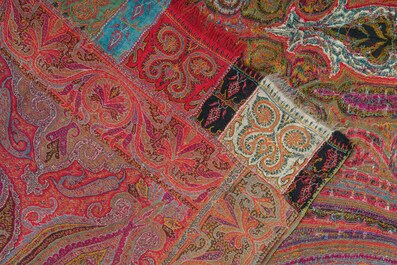
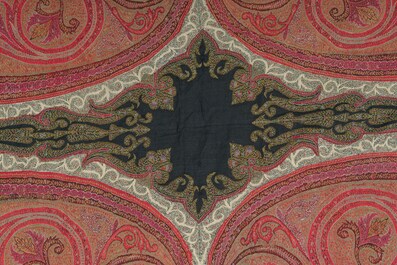
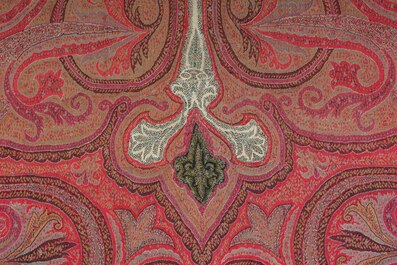
Kani shawl with a central medallion, a so-called 'moon field' composition, woven with boteh motifs, and featuring the characteristics of the classical pashmina textile art of India. The shawl is characterized by an extremely fine weave (no embroidery), small colourful lines that build up motifs (not chain stitches like sozni), a large central medallion structure, and subtle yet very rich colour gradations. The motifs in this shawl are not embroidered but woven with hundreds to thousands of small shuttles ('kani'). Such a shawl required 6 to 24 months of weaving by 3 to 6 weavers, making the 'kani' (also called 'thalim') technique one of the most labor-intensive textiles in the world. The central section ('chand dar' or 'moon field') consists of a cross-shaped centre surrounded by palmettes and boteh motifs, with floral arabesques all around, typical of Kashmir medallion shawls from the 19th C. What is called 'paisley' in Europe is originally the Kashmir boteh: a palm-shaped or almond-like symbol associated with fertility, protection, and prosperity, a motif that was particularly popular in Europe in the 18th and 19th C. The botehs on the shawl are complex, asymmetrical, and feature many internal micro-detailings, indicating a high level of craftsmanship. The colour palette consists of old rose, terracotta, beige, moss green, and wine red, indicating the use of natural dyes.
Estimation:
€ 2000
-
€ 4000