Nous devons vérifier que votre inscription n'est pas une entrée automatique. Veuillez s'il vous plaît compléter le test suivant:
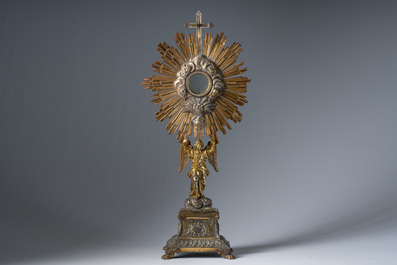
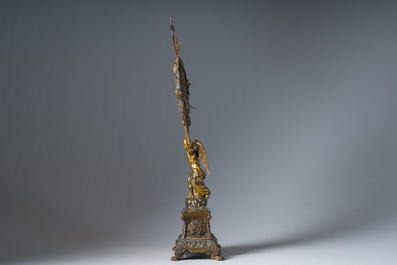
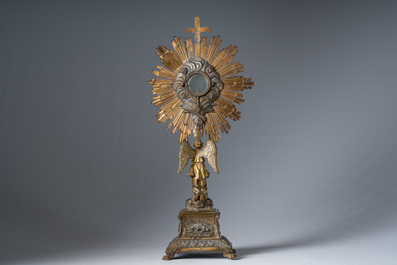
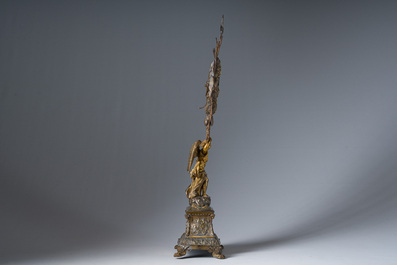
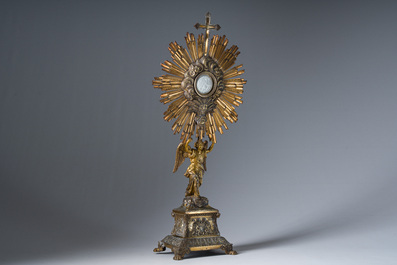
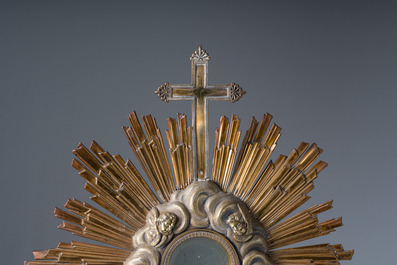
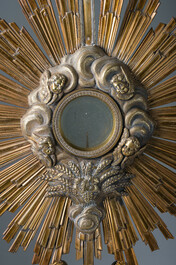
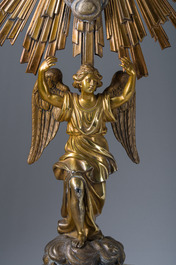
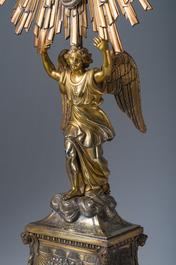
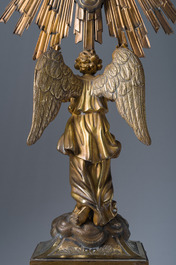
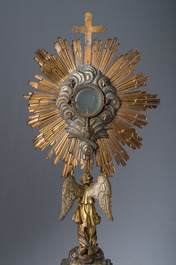
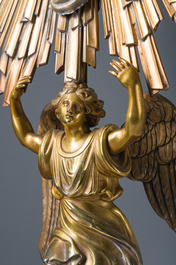
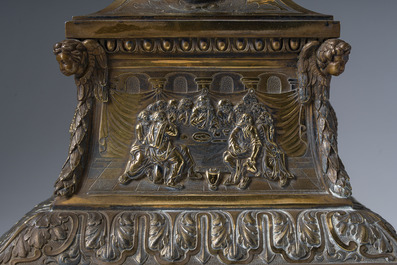
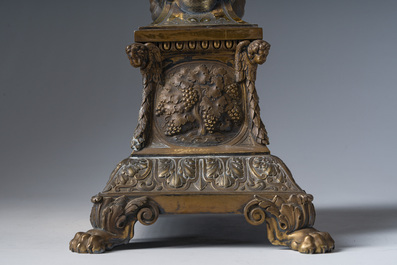
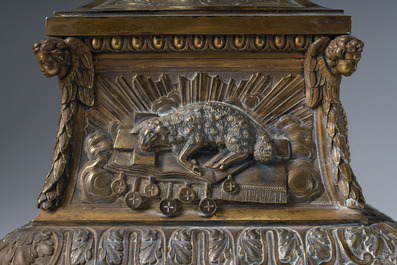
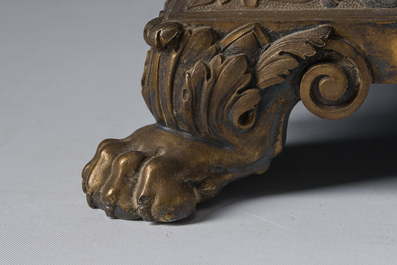
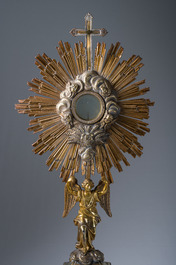
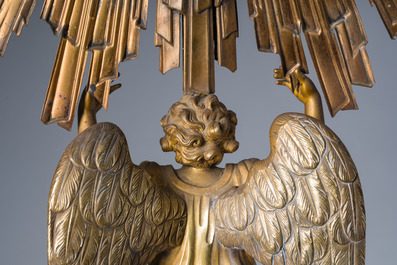
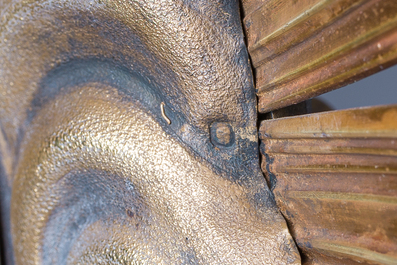
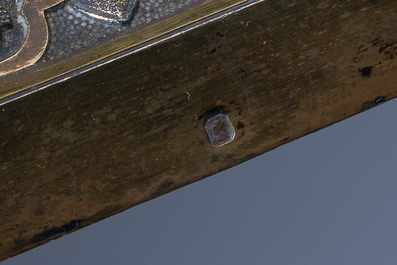
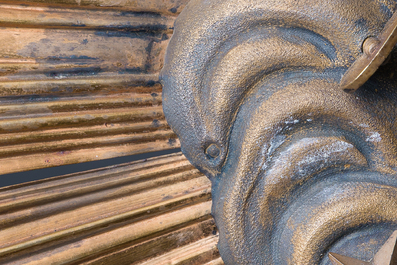
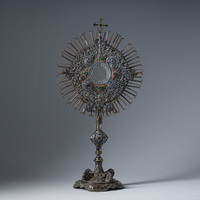
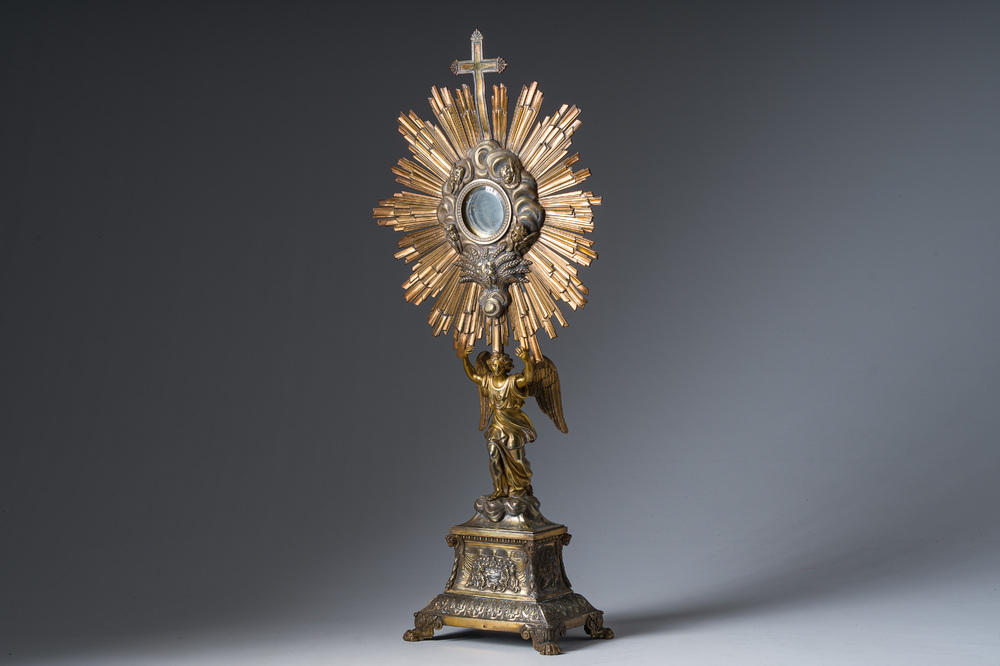
Ostensoir en argent doré avec un ange couronné d'un nuage radieux, poinçon du maître Hippolyte-François Bertrand-Paraud, 950/000, France, 19ème siècle
538
H 77 - L 34,5 - D 16 cm
Total weight: 2995 g
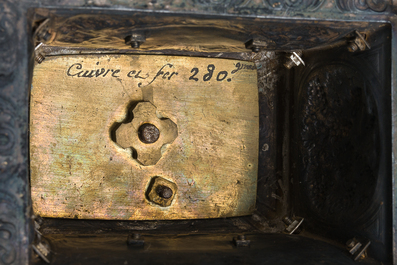
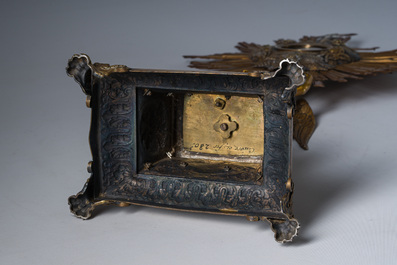
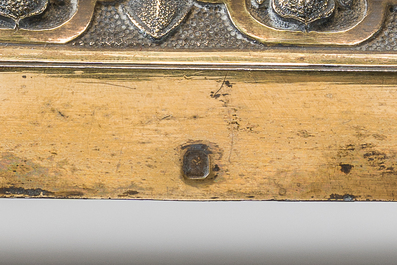
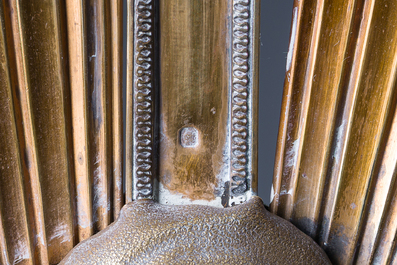
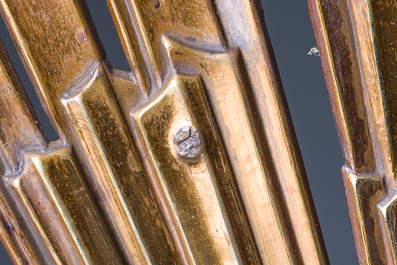
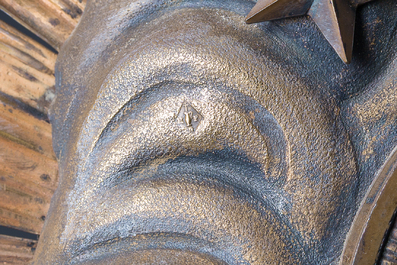
This monstrance bears the hallmark of the silversmith Hippolyte-François Bertrand Paraud (1813–1843) as well as the Minerva hallmark used in France from 1838 onwards. Research indicates that this monstrance was likely modelled on earlier designs created by Pierre Paraud, which were subsequently adopted by François Joseph Bertrand-Paraud.
History of the workshop:
Pierre Paraud (ca. 1775–1812) was a renowned Parisian silversmith who specialized in liturgical pieces. The Emperor entrusted him with the silverware for the Royal Chapel of the Tuileries, several pieces of which are now held in the Louvre Museum. Marguerite Hoguet (ca. 1775–1866), his widow, in turn opened a workshop and struck her first hallmark in 1811–1812, followed by a second in 1833, which was struck out in 1837. François Joseph Bertrand-Paraud (François-Isaac Bertrand, 1774–1832), her son-in-law, took over the family workshop at 18 Rue des Arcis in Paris. He registered his hallmark in 1817. On his death, his son Hippolythe François Bertrand-Paraud took over the workshop. He registered his hallmark on 19 April 1837, and it was struck off on 29 January 1844. The workshop was taken over by his student Charles-Eugène Trioullier (1811–1874) and then sold at the beginning of the 20th century to Antoine Montagnier.
Ref.:
- The model presented here can be compared with the neoclassically inspired monstrance created by Pierre Paraud and located in the Church of Saint-Remi in the city of Amiens. (link)
- On 5 April 2019, an auction organised by Primardeco in Toulouse brought to light a significant archive containing a remarkable collection of preparatory drawings from the workshop of the silversmiths listed below. (links: 1 - 2)
Estimation:
€ 5000
-
€ 10000