We moeten verifiëren dat uw registratie niet om een geautomatiseerde ingave in ons systeem gaat. Vervolledig aub de onderstaande test...
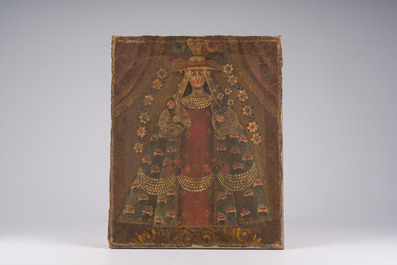
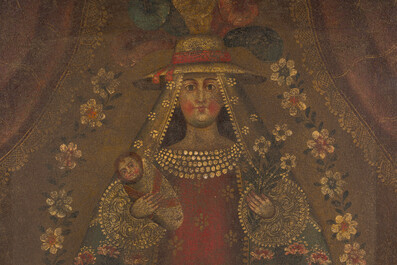
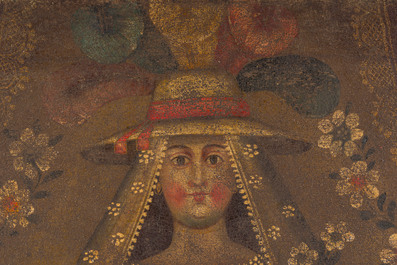
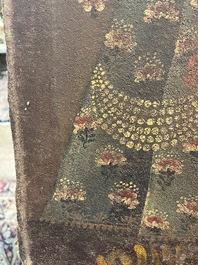
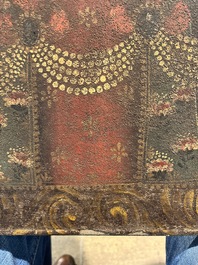
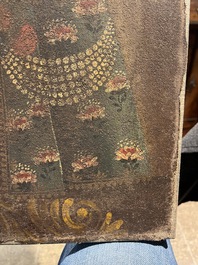
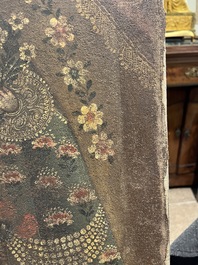
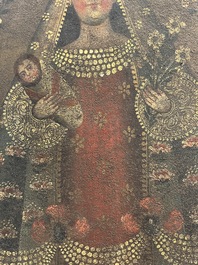
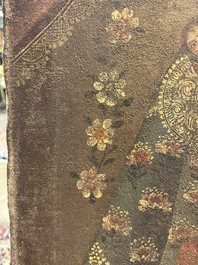
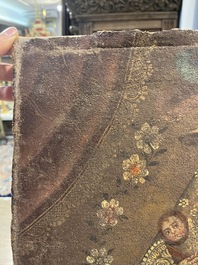
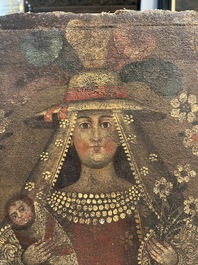
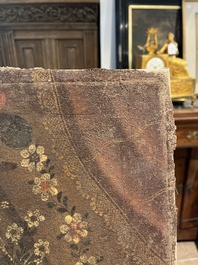
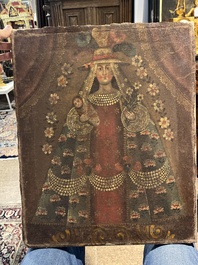
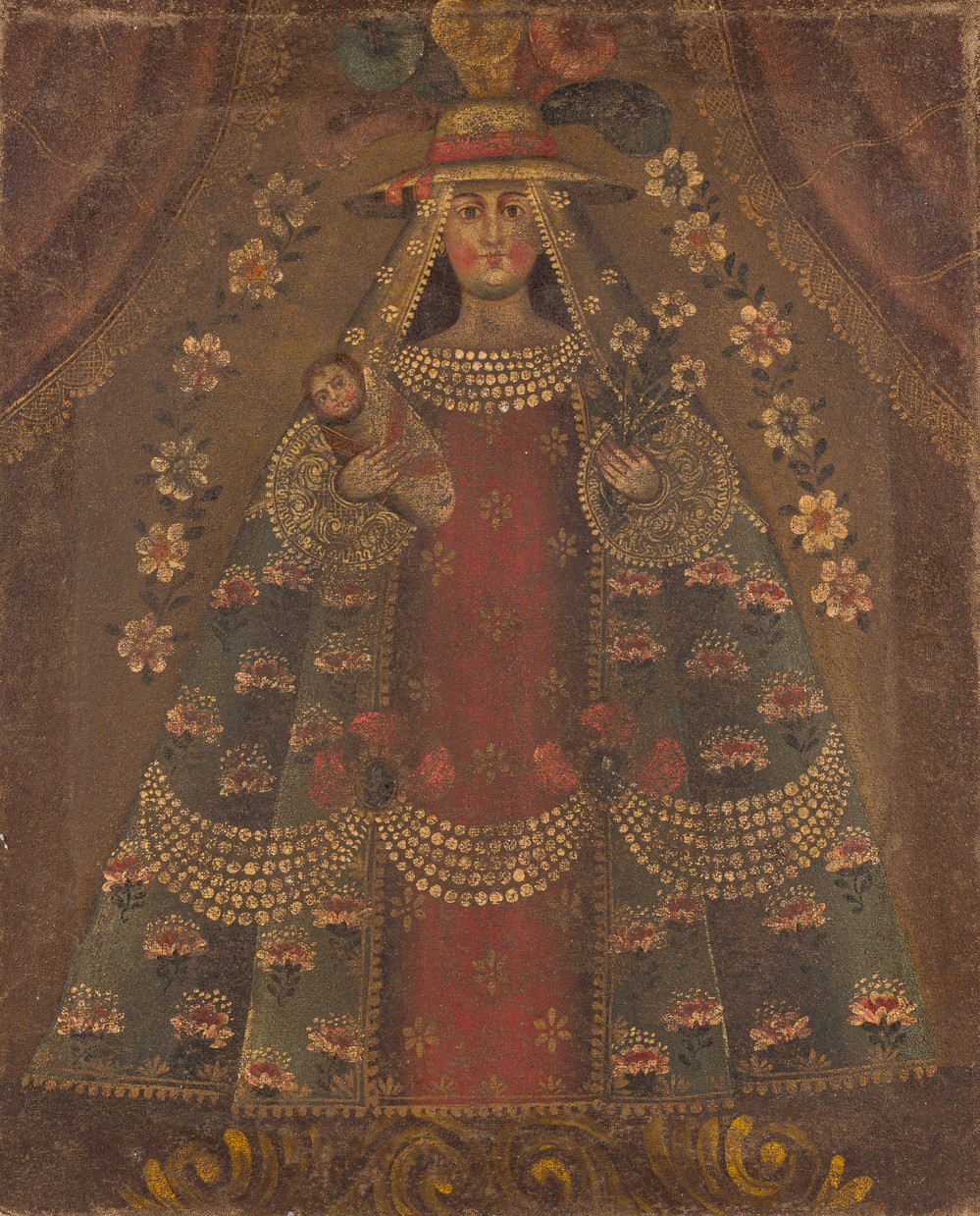
School van Cusco, Peru: Madonna met Kind, olie op doek, 18de eeuw
973
Work: 53,5 x 43,5 cm
The Cusco school (escuela cuzqueña) or Cuzco school, was a Roman Catholic artistic tradition based in Cusco, Peru (the former capital of the Inca Empire) during the Colonial period, in the 16th, 17th and 18th centuries. It was not limited to Cusco only, but spread to other cities in the Andes, as well as to present day Ecuador and Bolivia.
Many colonial Cusco school paintings are preserved, most of them currently at Cusco, but also in other areas of Peru, the town of Calamarca (Bolivia) and in museums of Brazil, United States and England.
The Cuzqueña paintings were a form of religious art whose main purpose was didactic. The Spanish, who aimed to convert the Incas to Catholicism, sent a group of religious artists to Cusco. These artists formed a school for Quechua people and Mestizos, teaching them drawing and oil painting. The designation "Cusqueña," however, is not limited to the city of Cusco or to indigenous artists, as White Criollo artists participated in the tradition as well.
A major patron of the Cusco artists was Bishop Manuel de Mollinedo y Angulo, who collected European art and made his collection available to Peruvian artists. He promoted and financially assisted such Cusqueña artists such as Basilio Santa Cruz Pumacallao, Antonio Sinchi Roca Inka, and Marcos Rivera.
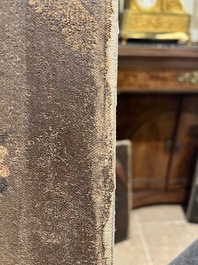
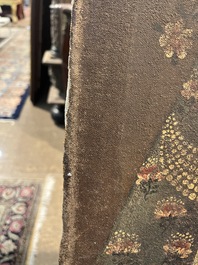
Condition: (UV-checked)
- The work in good and hangable condition.
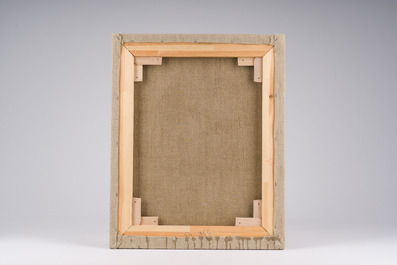
- Relined.
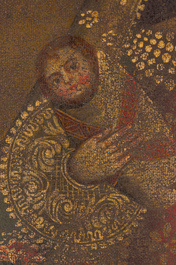
- A little worn; a little more where the canvas was folded.
- Under UV-light hardly any retouching visible.
Geschat:
€ 250
-
€ 500