We moeten verifiëren dat uw registratie niet om een geautomatiseerde ingave in ons systeem gaat. Vervolledig aub de onderstaande test...
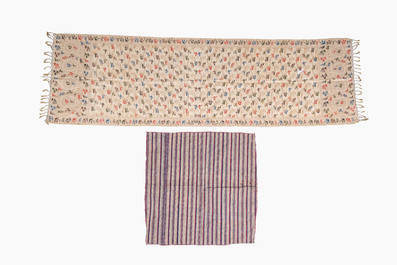
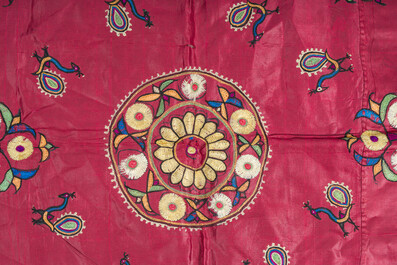
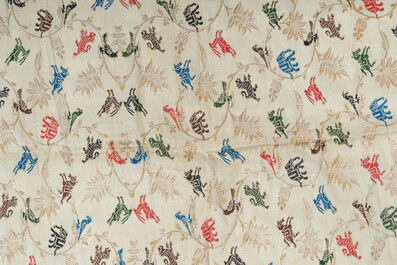
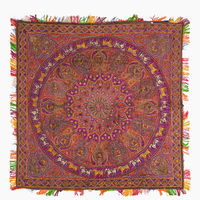
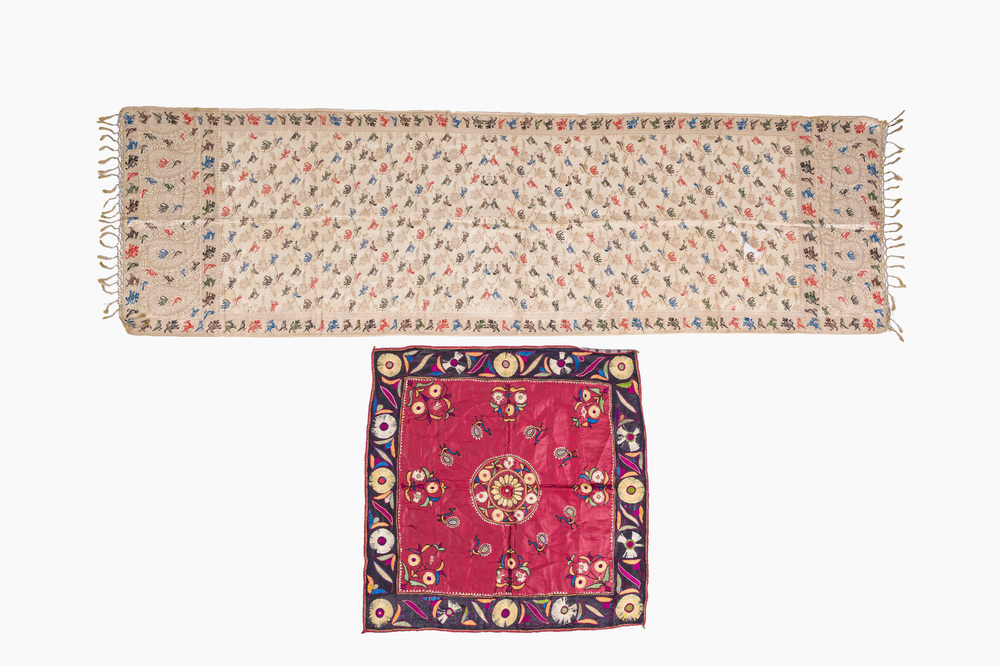
Een Indische handgeweven 'dupatta' in Patola-stijl en een ceremoniële 'rumal' van de Ahir in Kathiawar, Gujarat, 20ste eeuw
195
Ca. 183 x 54,5 cm
66 x 65,5 cm
A dupatta is a long shawl worn with ceremonial clothing. A characteristic of the Patola style is that the weaving is covered with embroidery of small animal motifs (elephants, horses, birds) in a repeating pattern across the entire surface. These all-over animal patterns are called 'rath, hathi, gaglo' (riding animals, elephants, birds) in Gujarati. The colours (red, black, green, blue) and the repetitive images with fine contours around each animal are also typical of Patola textiles.
The rumal is an altar cloth, a bridal gift or home decoration, with a rich floral iconography and a central medallion. Kathiawar is one of the most important textile regions of India, particularly for women's embroidery, its marriage culture, and domestic rituals. Such cloths were made for family use or served as a dowry and were not often sold. The cloth features hand-embroidered floral motifs with chain and satin stitches, a rich embroidery along the edge (black border with flora), a red satin base (silk or shiny cotton), a central medallion that served to place offerings or sacred objects and has the traditional Gujarati shades of red, yellow, green, turquoise, purple accents.
Geschat:
€ 300
-
€ 600